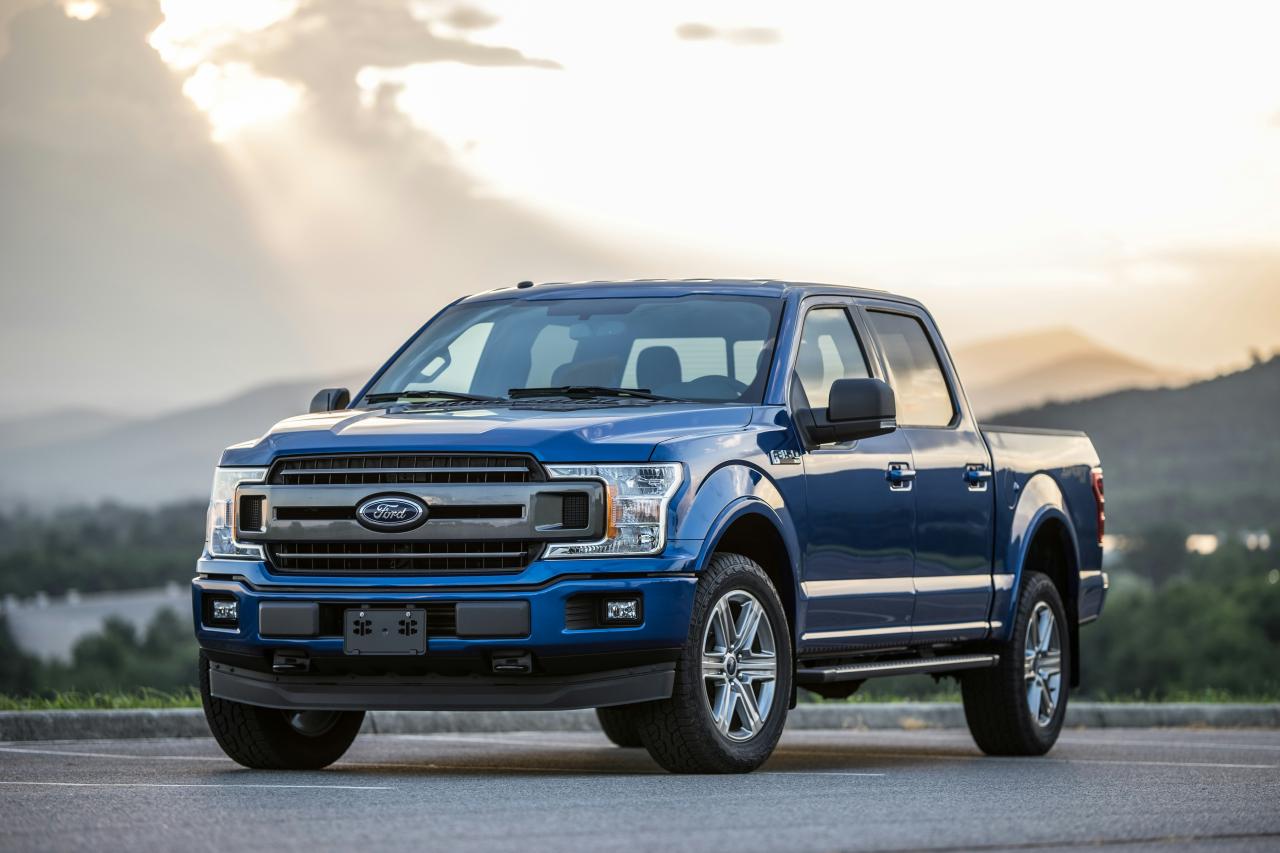
The automotive landscape witnessed a seismic shift as Ford Motor Company announced the termination of its all-electric F-150 Lightning production, simultaneously unveiling plans for a revolutionary Extended Range Electric Vehicle variant. This strategic transformation represents one of the most significant pivots in modern automotive history, reshaping the future of electric pickup trucks while challenging conventional wisdom about battery-powered vehicles.
The End of an Era
Ford’s decision to halt production of the fully electric F-150 Lightning marks a dramatic departure from the company’s ambitious electrification strategy launched in 2021. The original Lightning emerged as America’s best-selling electric pickup, yet consistently fell short of sales projections and profitability targets. Despite its groundbreaking technology and innovative features, the vehicle struggled to overcome fundamental market challenges that ultimately sealed its fate.
The announcement carries substantial financial implications for the Detroit automaker. Ford confirmed it will absorb approximately $19.5 billion in special charges related to this strategic restructuring, with the majority recorded during the fourth quarter of 2025. This staggering figure includes an $8.5 billion writedown of electric vehicle assets, representing one of the largest corporate adjustments in automotive history.
Production ceased at the Rouge Electric Vehicle Center in Dearborn, Michigan, where workers assembled Lightning units since the model’s commercial launch. Ford executives emphasized that this decision reflects customer-driven market realities rather than technological shortcomings. The company sold approximately 7,000 Lightning units quarterly over the past two years, peaking at nearly 11,000 vehicles during the fourth quarter of 2024—impressive numbers that nonetheless proved insufficient for sustainable profitability.
Revolutionary EREV Technology Emerges

The next-generation F-150 Lightning introduces Extended Range Electric Vehicle technology, fundamentally reimagining how electric trucks deliver performance and practicality. Unlike conventional hybrids where internal combustion engines directly power wheels, the EREV system maintains pure electric propulsion while incorporating a gas-powered generator exclusively for battery charging.
This innovative architecture preserves everything electric vehicle enthusiasts appreciate—instantaneous torque delivery, whisper-quiet operation, and smooth acceleration—while eliminating range anxiety that plagued battery-only trucks. The generator operates solely as an onboard charging station, never mechanically connected to the drivetrain, ensuring drivers experience authentic EV dynamics regardless of battery charge level.
Ford projects the EREV Lightning will achieve an estimated range exceeding 700 miles, more than doubling the current model’s maximum 320-mile capability. This dramatic improvement addresses the single most significant complaint from potential electric truck buyers: inadequate range when towing heavy loads or traveling long distances between charging stations.
Doug Field, Ford’s chief EV, digital and design officer, emphasized the transformative nature of this technology during the announcement. The new Lightning delivers near-instantaneous torque and pure electric driving characteristics while providing locomotive-like towing capability. Heavy-duty hauling and cross-country travel become as effortless as daily commuting, fundamentally altering the value proposition for truck buyers considering electrification.
Market Forces Driving Change

Multiple converging factors influenced Ford’s strategic pivot toward EREV technology. The elimination of the $7,500 federal EV tax credit in September 2025 dramatically impacted consumer purchasing behavior, reducing electric vehicle demand across the industry. Ford CEO Jim Farley acknowledged that regulatory changes played a meaningful role in the company’s decision-making process, though he emphasized they represented only one component of a complex market analysis.
Battery costs remained stubbornly elevated despite industry-wide predictions of significant price reductions. Manufacturing expenses for large electric trucks consistently exceeded initial projections, preventing Ford from achieving the $40,000 base price originally promised for the Lightning. The 2025 model started around $55,000, creating a substantial affordability gap that deterred mainstream truck buyers.
Consumer preferences revealed through sales data and market research indicated strong demand for vehicles offering flexibility and range confidence. Many traditional truck owners utilize their vehicles for towing recreational vehicles, boats, or work trailers over extended distances—use cases where current battery-only electric trucks demonstrate significant performance limitations. Range drops precipitously when hauling heavy loads, sometimes declining by 50 percent or more, creating practical obstacles for real-world applications.
Andrew Frick, president of Ford’s Model e and Blue divisions, explained that the company evaluated current market conditions rather than adhering to outdated forecasts from five years ago. Customers today prioritize affordable vehicles providing sufficient range for their lifestyles and requirements. The very high-end electric vehicles priced between $50,000 and $80,000 simply were not selling at projected volumes, forcing strategic reassessment.
Competitive Landscape Evolution
Ford’s EREV announcement positions the company within an emerging segment of extended-range electric vehicles gaining traction among manufacturers and consumers. Ram’s 1500 REV, scheduled for 2026 release, promises 690 miles of range using a 3.6-liter Pentastar V6 generator paired with dual electric motors producing 647 horsepower. The Ram system features a 92 kWh battery with maximum payload capacity of 2,625 pounds and towing ratings up to 14,000 pounds.
Scout Motors, the revived brand now owned by Volkswagen Group, plans to introduce Terra pickup trucks and Traveler SUVs with optional Harvester range-extender technology by late 2027. These vehicles target adventure-oriented buyers seeking electric performance with gasoline backup for remote locations lacking charging infrastructure.
The competitive dynamics reveal an industry-wide recognition that pure battery-electric trucks face significant market resistance despite substantial manufacturer investments. Tesla’s Cybertruck, Rivian’s R1T, and General Motors’ Silverado EV and Sierra EV all struggle with varying degrees of market acceptance, pricing pressures, and profitability challenges.
Ford’s first-mover advantage in the EREV truck segment could prove strategically valuable. The company possesses established F-Series brand equity, extensive dealer networks, and manufacturing expertise that newer competitors lack. Successfully executing this transition might enable Ford to capture market share from consumers reluctant to fully embrace battery-only electric vehicles while maintaining environmental credentials and technological leadership.
Financial Restructuring and Strategic Realignment
The $19.5 billion in special charges comprises multiple components reflecting the comprehensive nature of Ford’s strategic transformation. Asset impairments and program writedowns total $8.5 billion in 2025, acknowledging that previously capitalized investments no longer support future revenue generation. Joint venture disposition costs reach $3 billion in 2025 with an additional $3 billion across 2026 and 2027, primarily related to unwinding battery manufacturing partnerships.
Cash effects approximate $5.5 billion, with the majority paid during 2026 and the remainder in 2027. These outlays fund vehicle program cancellations, manufacturing line retooling, workforce transitions, and facility repurposing. Ford canceled development of three planned electric vehicles: a full-size pickup internally designated T3, plus two commercial van variants that no longer aligned with revised market projections.
Despite these massive charges, Ford raised its 2025 adjusted earnings before interest and taxes guidance to approximately $7 billion, citing continued underlying business strength and cost improvements. This figure exceeds the $6 billion to $6.5 billion range projected in October following production disruptions from an aluminum supplier fire. The company reaffirmed adjusted free cash flow guidance trending toward the high end of its $2 billion to $3 billion range.
Ford expects Model e, its electric vehicle division, to achieve profitability by 2029 through annual improvements beginning in 2026. The restructuring also targets enhanced profits in the traditional Ford Blue internal combustion vehicle unit and Ford Pro commercial fleet business, with early benefits emerging in 2026.
Battery Assets Repurposed for Energy Storage
Rather than idling expensive battery manufacturing capacity following the cancellation of large electric vehicle programs, Ford announced plans to enter the energy storage business. The company will repurpose existing facilities in Glendale, Kentucky, previously allocated for EV battery production, to manufacture battery energy storage systems serving data centers, utilities, and large-scale industrial customers.
This strategic initiative leverages underutilized electric vehicle battery capacity to create diversified revenue streams. Ford plans to invest approximately $2 billion over the next two years scaling this new business segment. The Kentucky facility will produce lithium iron phosphate prismatic cells, battery energy storage system modules, and 20-foot DC container systems—components forming the foundation of grid-scale energy storage solutions.
The energy storage market experiences explosive growth driven by proliferating data centers supporting artificial intelligence applications, renewable energy integration requiring load balancing, and grid modernization initiatives. Industry analysts project global battery energy storage system capacity will increase exponentially through 2030, creating substantial opportunities for manufacturers with production capabilities and technical expertise.
Lisa Drake, Ford’s vice president of technology platforms, characterized this pivot as a natural adjacency for the company. Grid-scale utility customers and data center providers represent potential buyers for battery systems originally designed for automotive applications. While this market segment faces intense competition from established players and startups, Ford’s manufacturing scale and battery technology licensing agreements could provide competitive advantages.
Workforce Implications and Manufacturing Transitions
The strategic realignment affects multiple Ford facilities and thousands of workers across the United States. The Rouge Electric Vehicle Center in Dearborn, which assembled Lightning trucks, will transition approximately one-third of its workforce to production of gasoline and hybrid F-150 models. The facility will eventually produce the next-generation Lightning EREV, though Ford has not disclosed specific timing for this transition.
The Tennessee Electric Vehicle Center will rebrand as Tennessee Truck Plant, shifting from pure electric vehicle production to manufacturing new Built Ford Tough truck models beginning in 2029. Similarly, Ford’s Ohio assembly plant will pivot to producing gas and hybrid vehicles in 2029, abandoning previously announced electric vehicle programs.
Ford committed to hiring thousands of workers across American facilities over coming years, reinforcing its position as the largest employer of hourly automotive workers in the United States. However, battery joint venture employees face uncertain futures. The Kentucky battery plant will shed approximately 1,600 positions as operations transition from automotive batteries to energy storage systems, requiring different skill sets and production volumes.
Union leaders and workforce advocates express mixed reactions to these announcements. While maintaining domestic manufacturing and creating new positions offers some reassurance, the shift away from ambitious electrification goals raises questions about long-term employment stability in an industry experiencing technological disruption and geopolitical pressure.
Engineering Challenges and Design Considerations
Integrating a gas-powered generator into the F-150 Lightning platform presents significant engineering challenges that Ford’s development teams must overcome. Packaging the generator, fuel tank, and associated systems within the existing vehicle architecture requires creative solutions balancing weight distribution, crash safety, thermal management, and maintenance accessibility.
The generator must operate efficiently across varying loads and environmental conditions while maintaining the quiet cabin experience electric vehicle owners expect. Sophisticated noise cancellation technology and strategic component placement will prove essential to preserving the refined driving character that differentiates electric trucks from their internal combustion counterparts.
Ford has not disclosed specific details regarding generator specifications, including displacement, configuration, or manufacturer. Industry observers speculate the company might utilize a compact turbocharged three-cylinder or four-cylinder engine optimized for constant-speed operation rather than varying RPM demands typical of direct vehicle propulsion. Such engines can achieve superior efficiency and reduced emissions compared to conventional automotive powerplants.
Thermal management systems must dissipate heat from both the generator and electric drivetrain components without compromising interior climate control or battery temperature regulation. The EREV architecture adds cooling requirements that demand careful integration to maintain reliability and prevent premature component degradation.
Software calibration determines when the generator activates, how aggressively it charges the battery, and whether drivers can manually control its operation. Ford likely will implement intelligent algorithms monitoring battery state of charge, power demand, driving conditions, and predicted route requirements to optimize generator usage and maximize efficiency.
Environmental and Regulatory Considerations
Ford’s pivot toward EREV technology occurs amid evolving environmental regulations and shifting political priorities regarding vehicle emissions. The Trump administration rolled back numerous Biden-era policies designed to accelerate electric vehicle adoption, including emissions standards that effectively required manufacturers to produce increasing percentages of zero-emission vehicles.
These regulatory changes reduce penalties for maintaining internal combustion vehicle production while diminishing incentives for pure electric vehicle development. Ford executives acknowledged that the altered regulatory landscape influenced their strategic decisions, though they maintain customer preferences and market economics drove the fundamental reassessment.
Environmental advocates express disappointment with Ford’s retreat from fully electric trucks, viewing it as capitulation to short-term profit pressures rather than leadership toward sustainable transportation. Critics argue that continued development of vehicles burning fossil fuels perpetuates climate-damaging emissions and delays the inevitable transition to zero-emission transportation.
Ford defends the EREV approach as pragmatic environmentalism, noting that electric motors provide 100 percent of propulsion force while generators operate only when necessary to extend range. During typical daily driving, EREV trucks function identically to pure electric vehicles, consuming no gasoline and producing zero tailpipe emissions. The generator provides backup capability for occasional long-distance travel or heavy towing—use cases representing a small percentage of total miles driven.
The company reaffirmed its commitment to achieving carbon neutrality by 2050, arguing that intermediate technologies like EREV systems accelerate electrification by eliminating barriers preventing mainstream buyers from adopting electric vehicles. By 2030, Ford projects that approximately 50 percent of its global volume will comprise hybrids, EREVs, and fully electric vehicles, up from 17 percent in 2025.
Consumer Reception and Market Implications
Early consumer reactions to the EREV Lightning announcement reveal divided opinions reflecting broader debates about vehicle electrification. Electric vehicle enthusiasts express disappointment that Ford abandoned pure battery power, viewing the addition of a gas generator as a step backward technologically and environmentally. These critics argue that manufacturers should solve range and charging challenges through improved battery technology rather than hybrid compromises.
Traditional truck buyers, conversely, welcome the EREV concept as addressing their primary concerns about electric vehicle practicality. The ability to tow boats, campers, or work trailers hundreds of miles without locating scarce charging stations or accepting dramatically reduced range eliminates the most significant obstacle preventing their consideration of electric trucks.
Industry analysts note that EREV technology potentially expands the addressable market for electrified trucks by appealing to consumers who rejected pure battery options. If Ford successfully executes this transition, the company might capture sales from buyers who would otherwise purchase conventional gasoline or diesel trucks, advancing electrification while maintaining market share and profitability.
Pricing strategy will critically influence market acceptance. The next-generation Lightning EREV presumably will cost more than equivalent gasoline F-150 models due to battery and dual-powertrain expenses, yet must remain competitive with other electric and extended-range trucks. Ford’s historical challenges pricing the original Lightning below $60,000 suggest the EREV version might debut above $70,000, potentially limiting market penetration despite enhanced capabilities.
Dealer networks and sales organizations require training to effectively communicate EREV benefits and operational characteristics to customers unfamiliar with this technology. Success depends on overcoming misconceptions about complexity, maintenance requirements, and fuel efficiency while highlighting advantages over both pure electric and conventional gasoline alternatives.
Future Outlook and Industry Implications
Ford’s strategic pivot toward EREV technology may signal broader industry trends as manufacturers reassess aggressive electrification timelines against market realities. Other automakers watching Lightning sales struggle and profitability challenges mount likely will adjust their own programs, potentially embracing hybrid solutions offering flexibility and reduced investment risk.
The success or failure of the EREV Lightning will influence product planning decisions across the automotive industry. If the vehicle achieves strong sales and positive customer reception, competitors may accelerate their own extended-range electric programs. Conversely, market rejection might push manufacturers back toward traditional hybrid architectures or renewed investment in hydrogen fuel cells and other alternative technologies.
Battery technology continues advancing, with solid-state batteries promising higher energy density, faster charging, and improved safety compared to current lithium-ion chemistries. If these technologies reach commercial viability within the next five years, they could dramatically alter the calculus favoring EREV systems by eliminating range and charging limitations that currently challenge pure electric vehicles.
Charging infrastructure expansion remains critical for long-term electric vehicle adoption regardless of powertrain architecture. While EREV systems reduce dependence on public charging networks, they cannot substitute for comprehensive fast-charging availability enabling true gasoline-vehicle parity. Government policies, utility investments, and private sector initiatives will determine whether charging infrastructure develops sufficiently to support mass electric vehicle adoption.
Ford’s commitment to launching affordable electric vehicles starting in 2027, beginning with a small pickup built on the new Universal EV Platform, suggests the company has not abandoned pure battery-electric ambitions. Rather, leadership recognizes that successful electrification requires offering diverse powertrain options matching varied customer needs, use cases, and price points. This portfolio approach acknowledges that no single technology currently satisfies all requirements for all buyers.
The Lightning’s transformation from pure electric to extended-range electric vehicle encapsulates the automotive industry’s ongoing struggle to balance environmental imperatives, technological capabilities, consumer preferences, and financial realities. Ford’s bold pivot demonstrates both the opportunities and challenges inherent in revolutionizing transportation while maintaining business viability. Whether this gamble succeeds will profoundly influence electric vehicle development trajectories for years to come, potentially redefining what it means for a truck to be “electric” in the 21st century.